When a shop manager schedules a weld inspection for the first time, one question usually comes up before any others: what is the inspector actually going to look at?
The answer depends on the applicable code, the project specification, and the stage of the work. But most weld inspections follow the same overall structure. Knowing what the inspector will review before the visit is the simplest way to keep the inspection moving and avoid rework.
Fusion Pro Test Training provides welding inspection throughout southeast and south-central Wisconsin from its base in Brookfield. Here is how a typical weld inspection breaks down, stage by stage.
Before Welding Starts: Paperwork and Setup
Inspection begins before anyone strikes an arc. The inspector will usually want to confirm that the foundation for the work is in place:
- A written welding procedure (WPS) that matches the work being performed
- Welder qualification records showing each welder is qualified for the process, position, and material involved
- Material identification for the base metal and filler metal
- Drawings and specifications that show weld sizes, lengths, and locations
Missing paperwork is one of the most common reasons an inspection stalls. A welder can produce a beautiful weld, but if there is no record showing that welder is qualified for the work, the inspection cannot be signed off cleanly.
Fit-Up and Joint Preparation
Once parts are ready to weld, the inspector checks the joint itself. That includes alignment, root opening, groove angle, land thickness, and cleanliness of the surfaces to be joined.
Catching a fit-up problem at this stage costs minutes. Catching it after welding can cost a cut-out, a repair, and a reinspection.
During Welding
While welding is underway, inspection typically focuses on whether the work matches the written procedure. That can include amperage and voltage settings, travel speed, interpass temperature, interpass cleaning, and the welder's technique and position.
On many jobs the inspector does not watch every arc. In-process checks are often sampled, which is why the welder qualification records and the WPS matter so much: they are what the inspector relies on when checking work after the fact.
After the Weld Is Complete
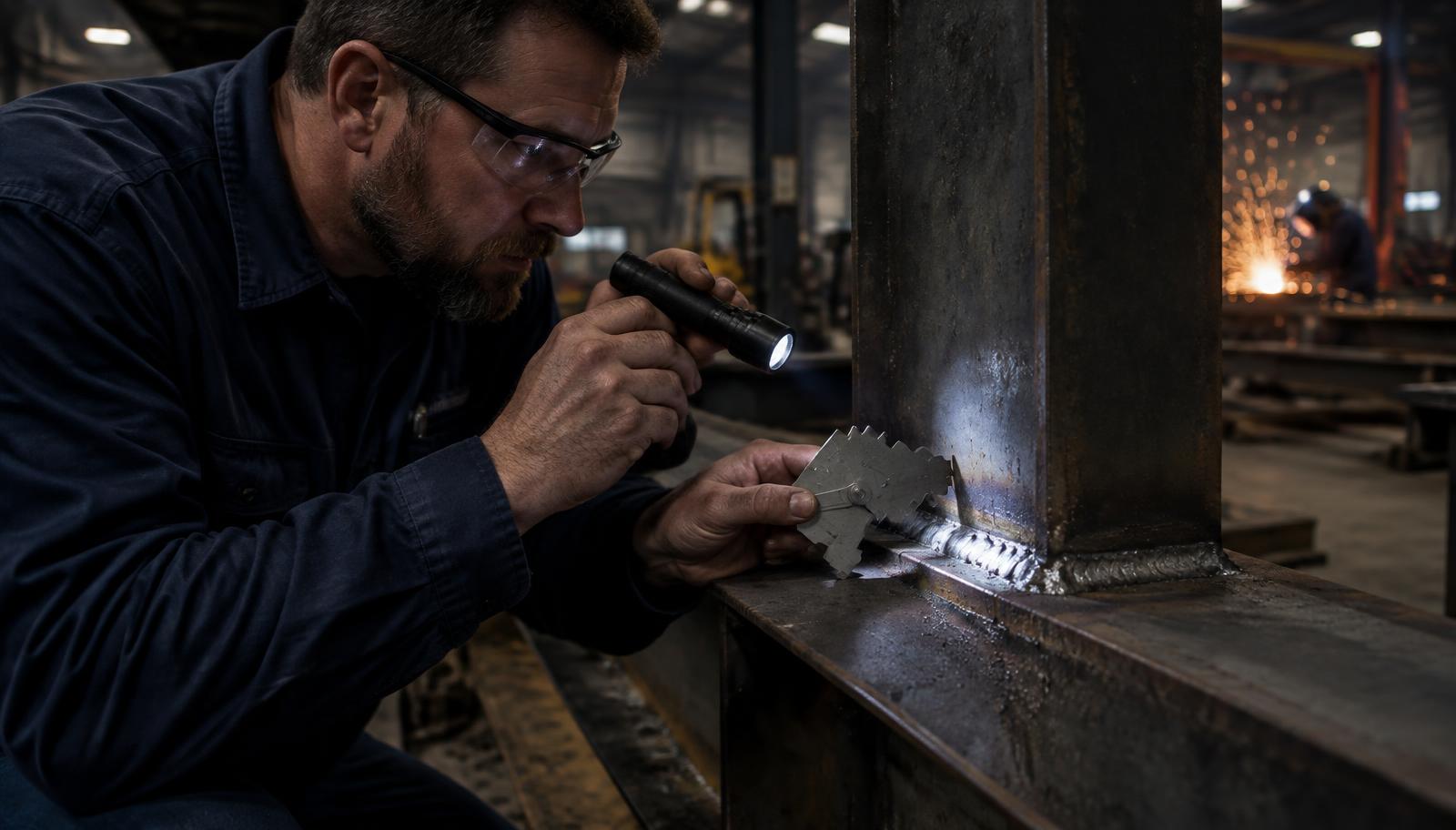
The most visible part of a weld inspection is the visual examination of the finished weld. The inspector looks at the weld surface and, where accessible, the surrounding base metal. Typical items include:
- Cracks, which are essentially never acceptable under structural codes
- Porosity and other surface discontinuities
- Undercut along the weld toes
- Weld size, length, and profile against the drawing requirements
- Fusion at the weld edges and termination points
Gauges are commonly used to measure weld size, convexity, undercut depth, and alignment. When the specification calls for it, the visual inspection is followed by additional testing such as bend tests on qualification coupons or referrals for other examination methods.
Common Reasons Welds Fail Inspection
In day-to-day work, the same handful of issues causes most rejected welds:
- Welds that are undersized or shorter than the drawing calls for
- Undercut deeper than the code allows
- Surface porosity, often from dirty material or poor gas coverage
- Cracks, including small toe cracks that are easy to miss without close examination
- Welds placed by someone whose qualification does not match the process or position
None of these are exotic problems. Most are preventable with a short pre-job conversation and a basic understanding of the acceptance criteria the welds will be judged against.
How to Make an Inspection Go Smoothly
A few habits make any weld inspection faster and friendlier for everyone involved:
- Have the WPS and welder records available before the inspector arrives
- Know which code and specification the work is built to
- Give the inspector safe access and, if possible, the same helper who set up the joints
- Keep completed welds identified so they can be matched to the drawings
- Ask which items, if any, need correction before the final sign-off
Weld Inspection for Wisconsin Shops
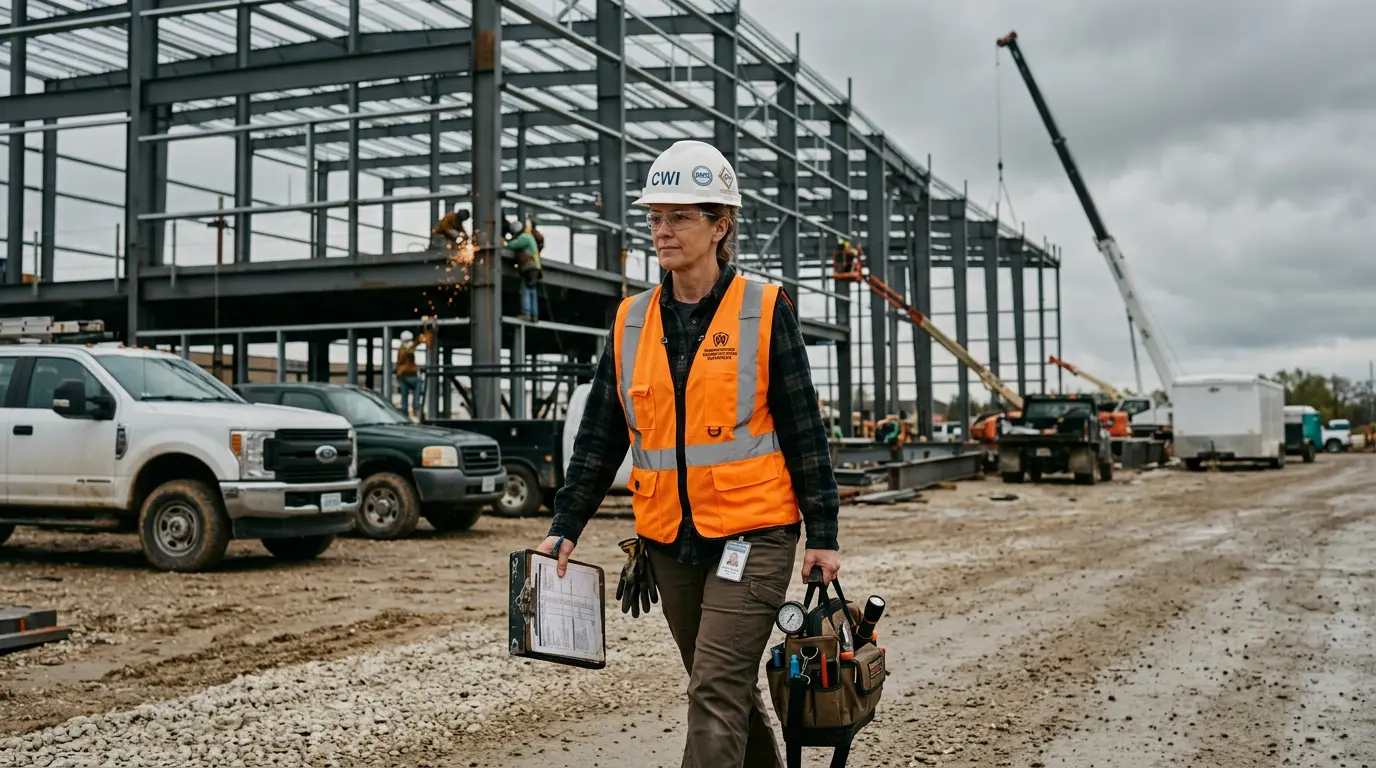
Fusion Pro provides weld inspection performed by an AWS Certified Welding Inspector, on site at shops and job sites within roughly 100 miles of Brookfield. Whether you need a one-time inspection before a delivery date or ongoing inspection support, send the code, material, and scope and you will get a straight answer on cost and timing.
Need a CWI on your floor?
Send us the code, welding process, position, material, location, and number of welders - we'll scope the visit and get your crew qualified on site.