A welding inspector is often called when somebody thinks there is already a problem.
That can be too late.
For Wisconsin fabricators, manufacturers, and contractors working on code-driven projects, inspection can provide more value when it is integrated into the job instead of treated only as a final checkpoint.
Fusion Pro Test Training provides on-site welding inspection throughout its service area from Brookfield, including visual inspection, procedure and qualification record review, fit-up inspection, in-process inspection, final acceptance inspection, and discrepancy reporting.
So when should a company get a Certified Welding Inspector involved?
Here are seven situations where an early call can make sense.
1. Before Welding Starts on a New Code-Driven Project
One of the best times to resolve a welding question is before the first arc is struck.
A new contract may reference AWS, ASME, API, or another project-specific standard. The drawings and specifications may also establish requirements for materials, procedures, welder qualifications, inspection, and acceptance criteria.
The people managing the job need to understand what applies before production gets underway.
A CWI can help review the welding-related requirements and identify areas that deserve attention before they become production problems.
This is especially useful when a shop is taking on a type of work it does not perform every day.
2. When You're Not Confident About the WPS, PQR, or Welder Qualification Records
Welding documentation contains a lot of acronyms, but the documents do different jobs.
A Welding Procedure Specification (WPS) provides the instructions and variables used to make the weld. A Procedure Qualification Record (PQR) documents the variables and test results supporting a qualified procedure where procedure qualification is required. Welder qualification records document the performance qualification of the individuals performing the work.
AWS specifically identifies WPS and PQR documents as fundamental parts of welding procedure qualification and notes that their roles are commonly misunderstood.
If the paperwork does not match the job, discovering that after fabrication is complete can create a much larger problem than correcting it before production.
Fusion Pro offers WPS, PQR, and welder qualification documentation review as part of its welding inspection services.
3. Before Critical Fit-Up Is Locked In
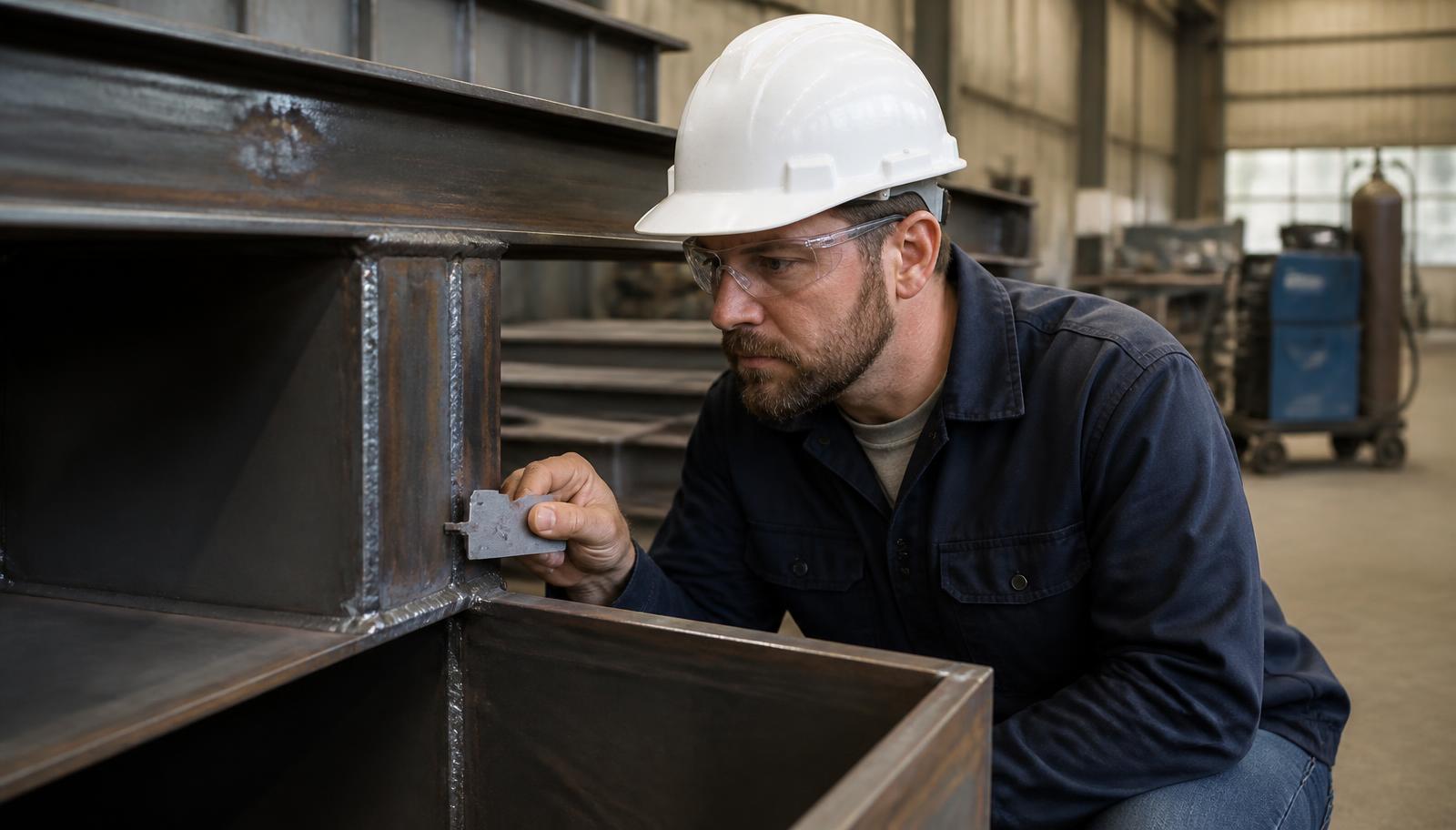
Inspection is not limited to finished welds.
Fit-up can influence whether a welder is starting from conditions that match the applicable drawing, procedure, and project requirements.
Once components have been welded into place, correcting a fit-up issue may require significantly more work than addressing it beforehand.
For jobs where fit-up is important to acceptance, having an inspector review the work at the appropriate stage can help the project team identify discrepancies before they are buried under completed weld metal.
Fusion Pro offers fit-up, in-process, and final inspection rather than limiting its service to finished welds.
4. During Production on Repetitive or High-Volume Work
If a shop is producing the same assembly repeatedly, waiting until the end of a production run to identify a recurring problem can multiply the amount of work affected.
In-process inspection gives the shop another opportunity to verify that welding is continuing in accordance with the specified requirements.
This can be particularly useful in manufacturing and structural fabrication environments where multiple welders, shifts, or workstations are producing similar welds.
The goal is not to slow production down.
It is to catch a potential issue while the team still has the opportunity to correct the process.
5. Before the Work Ships or Leaves the Jobsite
Final inspection is the stage most people associate with welding inspection.
And it matters.
Once steel leaves the shop, reaches another contractor, is installed in the field, or becomes part of a larger assembly, correcting rejected work can become more complicated.
A code-focused final visual inspection compares the completed work against the applicable acceptance criteria rather than relying on whether a weld simply “looks good.”
That distinction matters because appearance alone does not establish compliance.
Fusion Pro provides visual weld inspection based on the code and material specified for the project.
6. After a Discrepancy or Failed Inspection
A rejected weld is frustrating, but simply repairing the visible problem without understanding why it happened can lead to the same issue again.
When a discrepancy is identified, the team needs clear information:
- What was found?
- What requirement was not satisfied?
- Which welds or components are affected?
- What needs to be corrected?
- Does the repair require additional inspection?
Clear discrepancy reporting gives production personnel something actionable to work from.
Fusion Pro's inspection service includes reporting intended to identify discrepancies and provide clear rework guidance.
A CWI does not make the acceptance criteria disappear. The inspector helps the team understand how the work compares with the applicable requirements.
7. Before a Customer Review, Project Handoff, or Documentation Request
Sometimes the weld itself is not the problem.
The paperwork is.
A customer may ask for welder qualification records, procedure documentation, inspection records, or other evidence showing that the project was completed using the required controls.
That is when poor documentation becomes visible.
Building inspection and qualification records as the job progresses is much easier than trying to recreate them afterward.
Fusion Pro provides certification documentation and digital qualification records to employers in addition to its inspection services.
What Does a Certified Welding Inspector Actually Bring to the Job?
The AWS Certified Welding Inspector credential is focused on the practical application of welding inspection knowledge. AWS describes practical CWI examination activities that include applying WPSs and PQRs and using inspection tools and methods.
On an actual project, however, the CWI's job is not to invent a new standard for the shop.
The inspector works from the applicable code, specification, drawings, procedures, and acceptance criteria.
That can include:
- Reviewing welding documentation
- Checking welder qualifications
- Reviewing fit-up
- Performing visual inspection
- Monitoring work during production
- Documenting discrepancies
- Verifying final acceptance requirements
The exact scope depends on the project.
Inspection Is Easier When You Schedule It at the Right Stage
Waiting until everything is welded, painted, installed, or ready to ship may limit what can be reviewed efficiently.
A better approach is to identify important inspection points while planning the job.
For one project, that may mean a documentation review before fabrication and a final visual inspection.
For another, it could mean fit-up inspection, in-process checks, final inspection, and review of qualification records.
The right inspection plan depends on the governing requirements.
Local CWI Inspection Throughout Southeast Wisconsin
Fusion Pro is based in Brookfield and provides on-site welding inspection within a standard 100-mile service area. Locations served include Brookfield, Milwaukee, Waukesha, Wauwatosa, Pewaukee, Menomonee Falls, New Berlin, West Allis, Racine, Kenosha, Madison, Sheboygan, Fond du Lac, Beloit, and other Wisconsin communities.
That means local fabrication shops and contractors can bring inspection directly to the production floor or jobsite instead of trying to coordinate the work remotely.
Conclusion: Don't Make Inspection the Last Thing You Think About
Good welding inspection is more useful when it happens at the right point in the project.
Getting a CWI involved before production, during fit-up, while welding is underway, or before final shipment can help your team understand requirements and address discrepancies while there is still time to act.
If your Wisconsin project needs welding inspection, procedure review, qualification record review, fit-up inspection, in-process inspection, or final acceptance inspection, contact Fusion Pro Test Training. Fusion Pro provides on-site CWI services from Brookfield throughout Milwaukee, Waukesha, and communities across southeast and south-central Wisconsin.
Need a CWI on your floor?
Send us the code, welding process, position, material, location, and number of welders — we'll scope the visit and get your crew qualified on site.