When a Wisconsin fabrication shop or contractor needs a welder qualified for an upcoming project, sending employees across the state for testing can create another scheduling problem in an already busy production week.
There is another option: bring the testing to the shop or jobsite.
Fusion Pro Test Training provides on-site welder certification testing throughout southeast and south-central Wisconsin from its base in Brookfield. Testing can be performed at the location where the crew works, helping employers keep the process closer to normal shop operations.
For contractors, manufacturers, structural steel fabricators, and other businesses that rely on qualified welders, that convenience is only one benefit.
What Does On-Site Welder Certification Testing Involve?
A welder qualification test is designed to demonstrate that the welder can produce an acceptable weld under a defined set of conditions.
Those conditions matter.
Before testing, the employer and inspector need to identify details such as the applicable code, welding process, position, material, and project requirements. Fusion Pro scopes those details before the visit so the appropriate test can be planned for the employer's needs.
The American Welding Society distinguishes between welder performance qualification—demonstrating the ability to produce welds that meet the applicable standard—and the written certification or record documenting that performance.
That distinction is important for employers. It is not enough to know that someone is an experienced welder. The company needs documentation showing what the welder has actually been qualified to do.
Why Bring Welder Testing to Your Shop?
Reduce Unnecessary Travel and Production Disruption
Taking a welder out of production for a test may involve more than the test itself. There can be drive time, scheduling coordination, equipment changes, and lost production hours.
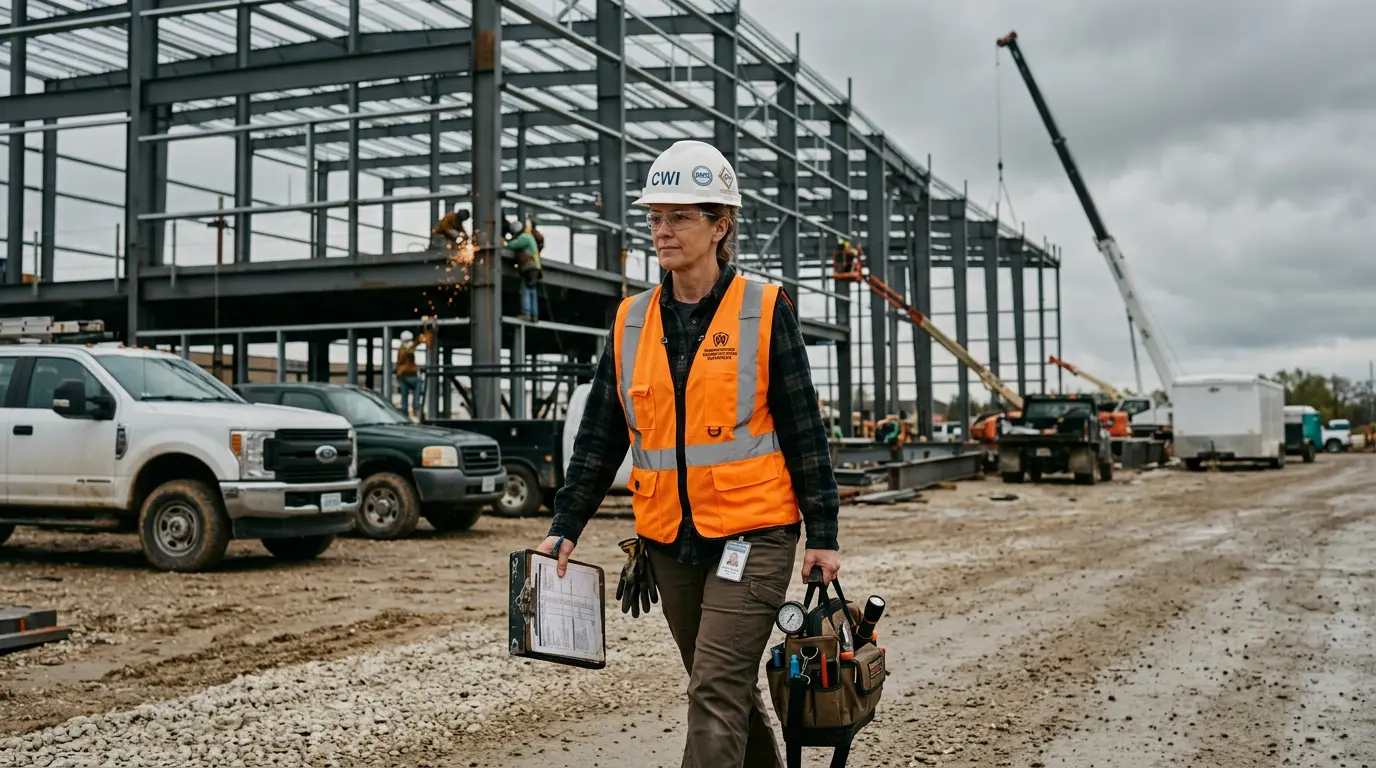
With on-site testing, the CWI comes to the employer.
Fusion Pro performs testing at shops and jobsites within its standard service radius around Brookfield, allowing welders to complete the required testing without the company sending its crew to another testing location.
For a company qualifying several welders, keeping the process on site can be especially useful.
Keep Testing Close to Real Working Conditions
Welders do their best work when they understand the equipment, setup, process, and expectations in front of them.
On-site certification also gives the employer an opportunity to coordinate the test around the processes and positions that matter to the actual work being performed.
That does not make the test easier. Acceptance still depends on the applicable requirements.
It simply makes the qualification process easier to integrate into the company's operations.
Get Documentation the Company Can Maintain
Qualification paperwork should not become an afterthought.
Fusion Pro provides signed qualification records to the employer and offers digital records along with guidance on continuity tracking.
That documentation can become important when a general contractor, customer, inspector, auditor, or project specification requires proof that the individuals performing welding are properly qualified for the work assigned to them.
What Welding Codes and Processes Can Be Tested?
The correct qualification depends on the work.
Fusion Pro commonly provides testing involving AWS structural welding codes including AWS D1.1, D1.2, D1.5, and D1.6, as well as ASME Section IX and API 1104 applications. The company works with processes including SMAW, GMAW, FCAW, GTAW, and SAW.
For example, a structural steel fabricator may have very different qualification needs from a contractor performing piping or pipeline work.
That is why the first question should not simply be, “Can you certify our welder?”
Better questions include:
- What code governs the project?
- Which welding process will be used?
- What material is involved?
- What position will the welder need to perform?
- How many welders need to be tested?
- Are there project-specific qualification requirements?
Defining those details first helps avoid testing someone for a qualification that does not match the actual job.
What Happens During an On-Site Welder Test?
Fusion Pro's process starts with scoping the job. The code, process, position, material, and number of welders are confirmed before the site visit.
From there, testing is scheduled at the shop or jobsite.
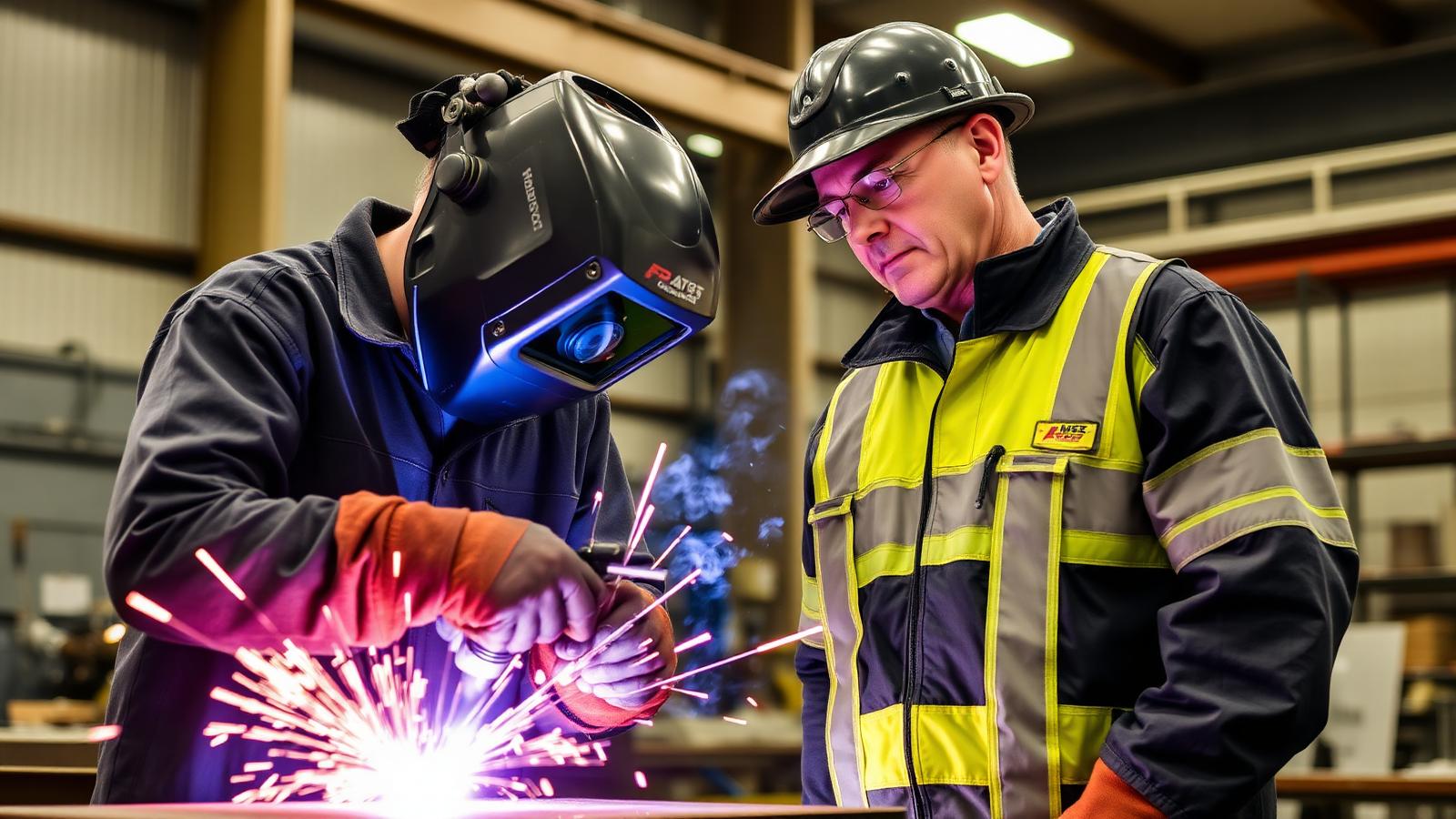
During testing, weld coupons are produced and evaluated according to the applicable requirements. Depending on the test and code, evaluation may involve visual acceptance as well as additional testing such as bends or macros. Documentation is then prepared for the employer.
The result is a defined qualification tied to a specific set of variables—not a blanket statement that a welder is qualified for every type of welding.
Don't Forget About Welder Continuity
Passing the original test is only one part of managing welder qualifications.
Continuity requirements may also apply.
For the AWS Certified Welder program, AWS states that certification remains active when required continuity is maintained, including maintenance documentation confirming continued use of the applicable welding process at six-month intervals. Other employer, code, or project requirements may differ, so companies should always follow the rules that apply to their particular qualification.
A good recordkeeping system helps a company know:
- Who is currently qualified
- Which processes each welder is qualified for
- Which positions and ranges are covered
- When continuity was last documented
- When additional testing may be required
Waiting until a customer asks for the paperwork is usually the least convenient time to discover a gap.
Who Benefits From On-Site Certification?
On-site testing can make sense for many Wisconsin businesses that depend on welding, including:
Structural Steel Fabricators
Shops working under structural welding requirements may need documented welder qualifications before employees are assigned to production work.
Manufacturing and Heavy Equipment Shops
Manufacturers can qualify employees while keeping the process close to their production environment.
Construction Contractors
Field crews may need qualification testing before beginning code-driven work on a project.
Pipeline and Process Contractors
Projects governed by pipeline or pressure-related requirements can involve different qualification rules and procedures.
Fusion Pro serves manufacturing, structural steel, pipeline, pressure vessel and boiler, oil and gas, heavy equipment, and construction customers.
Local Welder Certification Across Southeast Wisconsin
Fusion Pro is based in Brookfield and travels throughout a roughly 100-mile service area.
That includes businesses in and around Milwaukee, Waukesha, Wauwatosa, Pewaukee, Menomonee Falls, New Berlin, West Allis, Oconomowoc, Hartland, Sussex, Delafield, Muskego, Franklin, Racine, Kenosha, Madison, Sheboygan, Fond du Lac, and Beloit.
For companies with multiple welders to qualify, upcoming project requirements, or certification paperwork that needs to be brought up to date, bringing a CWI to the shop can simplify the process.
Conclusion: Get Your Welders Qualified Without Sending the Crew Across Wisconsin
Welder qualification should support production—not create another logistical headache.
On-site testing gives Wisconsin employers a practical way to coordinate qualification testing, inspection, and documentation at their own shop or jobsite while making sure the test matches the applicable code and work being performed.
Fusion Pro Test Training provides on-site welder certification testing throughout Brookfield, Milwaukee, Waukesha, and communities across southeast and south-central Wisconsin. Contact Fusion Pro with your code, welding process, position, material, location, and number of welders to discuss the qualification testing your crew needs.
Need a CWI on your floor?
Send us the code, welding process, position, material, location, and number of welders — we'll scope the visit and get your crew qualified on site.