
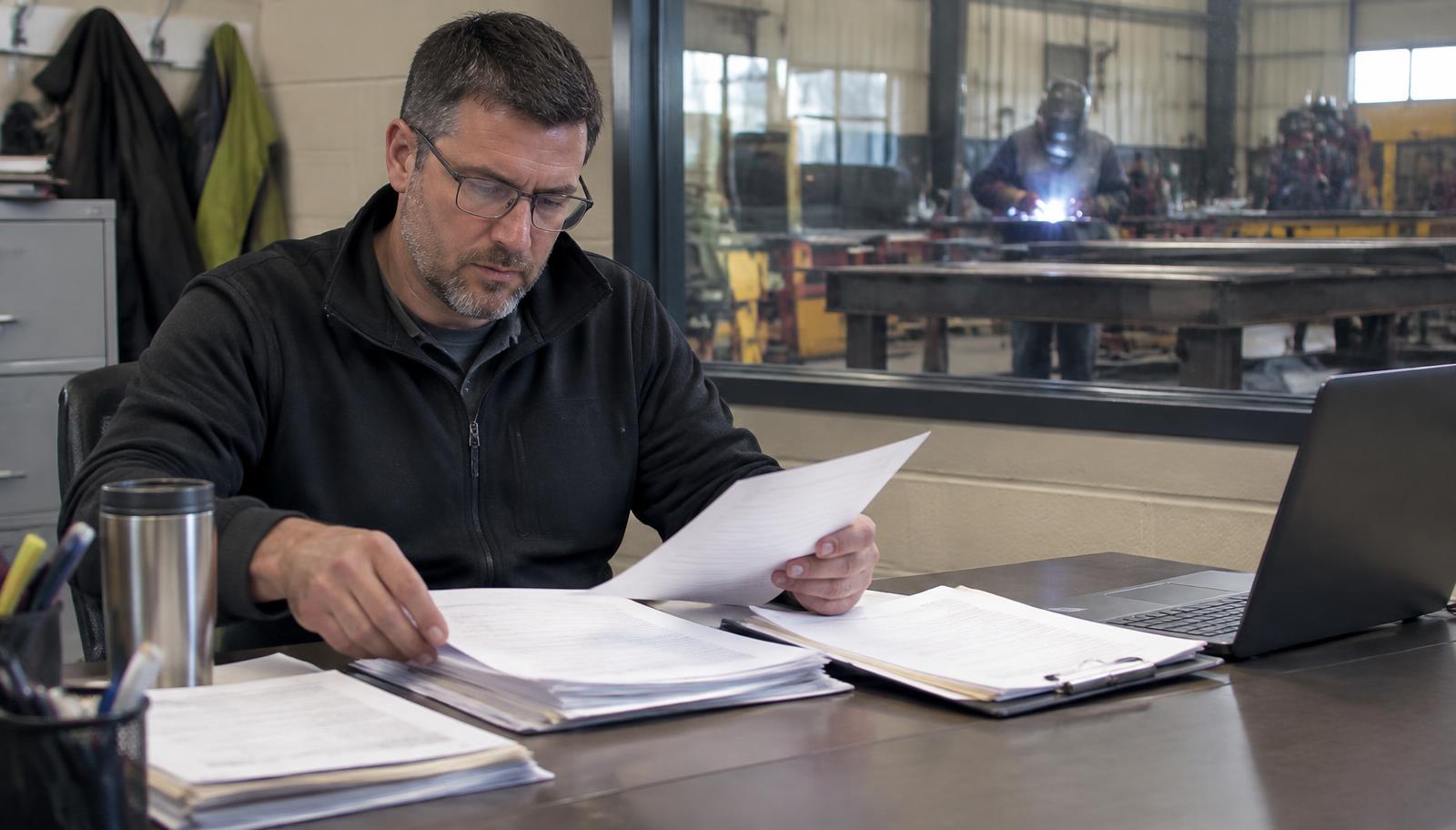
A customer asks for welding records before releasing the next stage of a project. Your team knows the work has been planned, but the paperwork is spread across an old email thread, a supervisor's desktop, and a shared folder nobody has reviewed recently.
For a Waukesha manufacturer or Brookfield fabrication shop, that is a coordination problem worth addressing before the next deadline. You want the right person to find the right record, understand its purpose, and identify questions early.
September can serve as a useful checkpoint before fourth-quarter work begins. The goal is not to create a complicated filing system. It is to make your existing information usable and expose missing details while there is time to resolve them.
Know What the Record Is Meant to Show
A welder qualification record documents the test and its applicable qualification scope. It should not be treated as a general certificate covering every future welding assignment. AWS explains that qualification documentation includes test variables and the ranges permitted by the relevant standard.
Terminology and form names vary. You may encounter WQTR, WPQ, or other abbreviations depending on the code and organization. Identify what each document actually records instead of assuming that two similarly named forms serve the same purpose.
When something is unclear, ask for a technical review before assigning the record to a new project.
Build an Index Your Team Can Use
Start with a simple spreadsheet or searchable register. Give each record an entry and link that entry to the original file. The index should help people locate information, while the underlying document remains the reference.
Useful administrative fields include:
- Welder name or internal employee identifier.
- Record number and test date.
- Applicable code as shown on the record.
- Process and other scope details transcribed from the document.
- Location of supporting files.
- Person responsible for reviewing the record.
- Outstanding questions and follow-up status.
Do not turn the spreadsheet into an unofficial interpretation of the code. If a qualification range needs explanation, record the question and assign it for review rather than guessing.
Compare Records With the Actual Assignment
Before sending a document package to a customer, place the project requirements beside the available records. Ask your technical reviewer to confirm which documents are relevant and whether anything remains unresolved.
For example, imagine a Waukesha shop receiving a repeat order with revised welding requirements. The team may recognize the customer and assume the old package can be reused. A deliberate review creates a chance to catch the change before that assumption reaches the shop floor.
This is a planning example, not a claim about a particular Fusion Pro customer. The lesson is simple: review the current assignment rather than relying on the familiarity of the project name.
Keep Procedures and Individual Records Easy to Distinguish
A shared folder becomes confusing when procedure documents, individual qualification records, drawings, and inspection reports all have generic filenames such as “welding cert final.”
Create separate folders or clear filename prefixes for each document type. Use a consistent naming convention that includes an identifier and date. Preserve signed originals and avoid overwriting them when preparing a customer submission.
If you combine documents into one package, keep a contents list. A reviewer should be able to tell which file relates to the procedure, which relates to a person, and which records the project inspection. That clarity also helps administrative staff route technical questions to the right person.
Give Continuity Tracking a Named Owner
Where continued validity depends on documented welding activity, ask your reviewer to identify the applicable requirements, evidence, and timing. Do not assume one interval or one form applies to every code, process, and certification arrangement.
Fusion Pro lists continuity-tracking guidance among its documentation services. Use that discussion to establish what your company needs to maintain for its particular qualifications.
From an administrative standpoint, name the person responsible, set reminders based on the confirmed requirements, and define where supporting information will be stored. A reminder marked “check welding records” is more useful when it points to a specific owner and action.
Make the Customer Handoff Predictable
Ask the customer which documents they expect and who will review them. Also confirm the submission format and required timing. Those questions help prevent an otherwise complete package from being sent to the wrong person or arriving after a decision has already been delayed.
Keep a copy of what was submitted and record when it was sent. If a reviewer asks for a revision, preserve the request alongside the revised package. This creates a clear history without forcing your team to reconstruct the conversation from several inboxes.
Customer acceptance should be confirmed through the project's process. Possessing a neatly organized folder does not itself establish approval.
Use a Short Monthly Records Review
You do not need to rebuild the filing system every month. Set aside a brief review focused on changes:
1. Add newly issued records to the index.
2. Check upcoming projects for document requests.
3. Review open technical questions.
4. Follow up on the reminders established for your requirements.
5. Confirm that the responsible people can access the files.
For a small team, one person may manage the register while a supervisor or qualified reviewer handles technical decisions. Keeping those roles clear helps the work move without making the administrator responsible for interpreting unfamiliar requirements.
Frequently Asked Questions
Who receives records issued by Fusion Pro?
Fusion Pro states that it provides signed qualification records to the employer, with digital PDFs available. Confirm the correct company contact when arranging the service.
Does every record need the same renewal schedule?
Do not assume so. Ask for guidance tied to the governing requirements and the qualification involved before setting reminders or deciding whether retesting is necessary.
Can an old record be used for a new customer?
Its relevance and acceptance need review. Send the record along with the new customer's requirements so the question can be assessed against the actual work.
Organize Your Records Before the Next Wisconsin Project
Make the next paperwork request easier to handle. Fusion Pro Test Training offers certification documentation services for employers in Brookfield, Waukesha, Milwaukee, and its surrounding service area. Email fusionprotesting@gmail.com to discuss the records your company needs.
Need a CWI on your floor?
Send us the code, welding process, position, material, location, and number of welders - we'll scope the visit and get your crew qualified on site.