A good production welder can still walk into a qualification test unprepared.
That does not necessarily mean the welder lacks skill.
Sometimes the problem is that the employee does not know exactly what will be tested, has not practiced the required position recently, is unfamiliar with the procedure, or has spent months welding under conditions that are different from the qualification test.
For Wisconsin shop managers and contractors, preparation should begin before certification day.
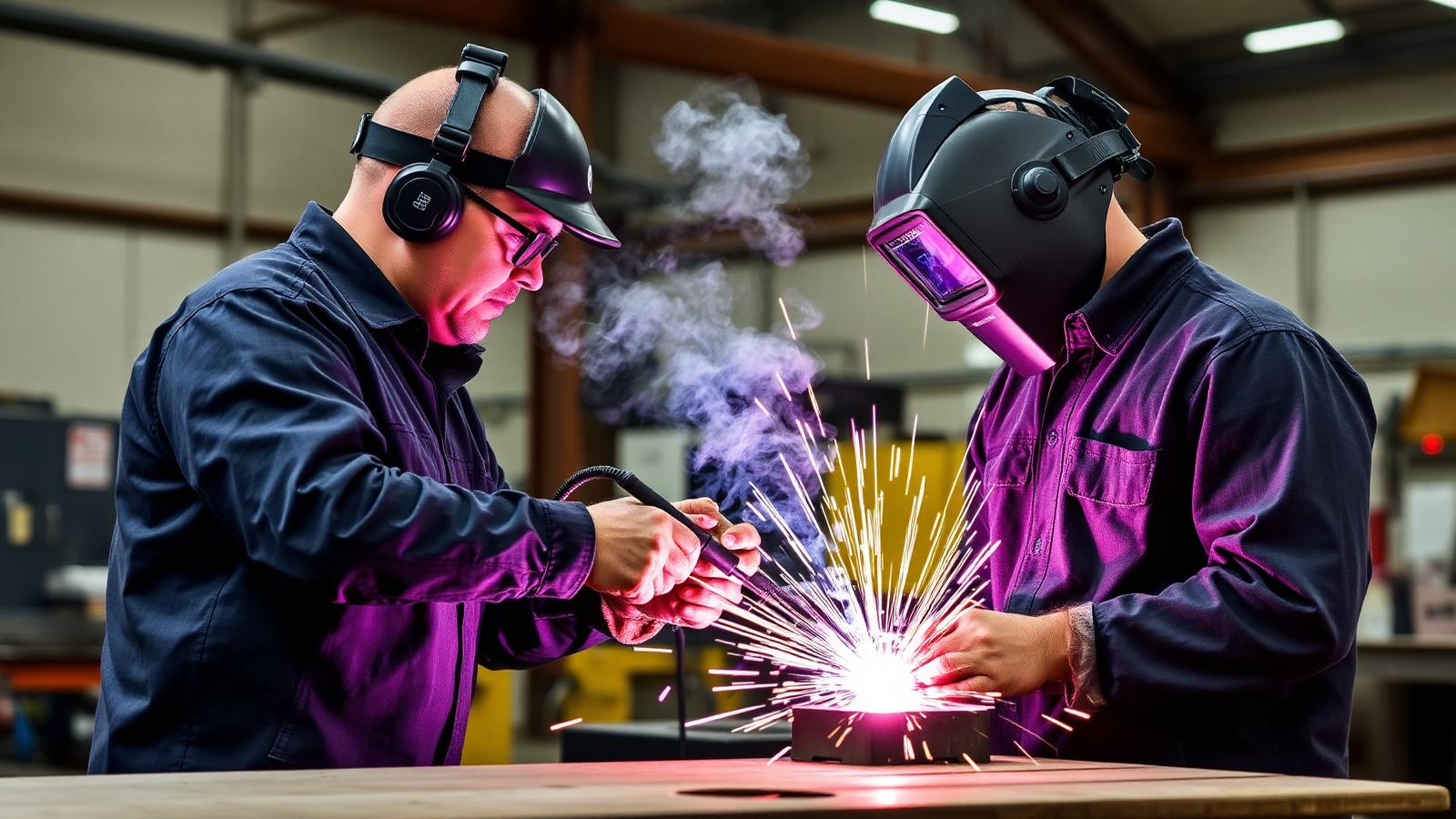
Fusion Pro Test Training provides hands-on welding training and certification prep for AWS, ASME, and API qualification testing, including position-specific coaching and technique work for SMAW, GMAW, FCAW, and GTAW.
Here is a practical checklist to help get your welders ready.
Step 1: Know Exactly What the Welder Is Testing For
“Getting certified” is too vague to build a useful preparation plan.
Start with the requirements.
Determine:
- Governing code or specification
- Welding process
- Base material
- Joint configuration
- Welding position
- Electrode or filler metal requirements
- Applicable WPS
- Testing and acceptance method
- Any project-specific requirements
Fusion Pro starts its own testing process by confirming the code, process, position, material, and number of welders involved.
That same information should guide test preparation.
A welder who spends two days practicing the wrong process or position may be practicing hard without preparing for the actual test.
Step 2: Make Sure the Welder Understands the WPS
Experienced welders sometimes rely heavily on habit.
A qualification test is not the time to assume that the way a weld is normally made in the shop matches the procedure being used for the test.
Review the WPS before practice begins.
The welder should know the parameters and variables that affect the work and should be comfortable following the procedure rather than improvising.
AWS describes the WPS as the document that establishes the instructions used to produce welds meeting the desired requirements, while supporting procedure qualification records document the basis for qualified procedures where required.
The test-prep goal is straightforward: make following the applicable procedure feel normal before certification day arrives.
Step 3: Practice the Actual Welding Position
A welder who performs flat welds every day may be excellent at flat welding.
That does not automatically mean the same welder is ready for an overhead, vertical, or pipe qualification.
Position changes technique.
Body position changes. Visibility changes. Puddle control changes. Travel becomes less comfortable. Starts and stops may feel different.
Practice should therefore match the position being tested as closely as practical.
Fusion Pro offers position-specific certification prep covering work from 1G through 6G as well as vertical and overhead applications.
If the employee is testing in an unfamiliar position, give that position meaningful practice time instead of assuming general welding experience will carry the test.
Step 4: Practice With the Process Being Tested
SMAW, GMAW, FCAW, and GTAW require different habits.
Even welders who are capable in several processes can become rusty when they spend most of their production time using only one.
If the upcoming qualification uses a process the employee has not performed regularly, schedule practice with that process beforehand.
Fusion Pro provides technique refinement for SMAW, GMAW, FCAW, and GTAW as part of its certification-prep service.
The objective is not to teach shortcuts.
It is to identify small technique problems before they become test-day problems.
Step 5: Pay Attention to Fit-Up and Preparation
The final weld begins before the arc.
If the test involves a joint that must be prepared and fit according to defined requirements, the welder should be comfortable with the setup rather than treating it as an afterthought.
During practice, pay attention to:
- Joint preparation
- Alignment
- Root opening where applicable
- Tack placement
- Cleanliness
- Electrode or filler preparation
- Machine setup
- Comfortable body positioning
A welder who rushes through setup can make the welding portion harder than it needs to be.
Practice the whole sequence—not just depositing weld metal.
Step 6: Identify Technique Problems Before Test Day
Test prep is most useful when somebody can observe the welder objectively.
Common preparation problems can include inconsistent travel speed, difficulty controlling the puddle in an unfamiliar position, poor starts and stops, uncomfortable body positioning, or simply rushing because the welder knows the test is being watched.
These issues are easier to address during practice than during the official qualification.
That is where coaching from an experienced inspector or educator can be useful.
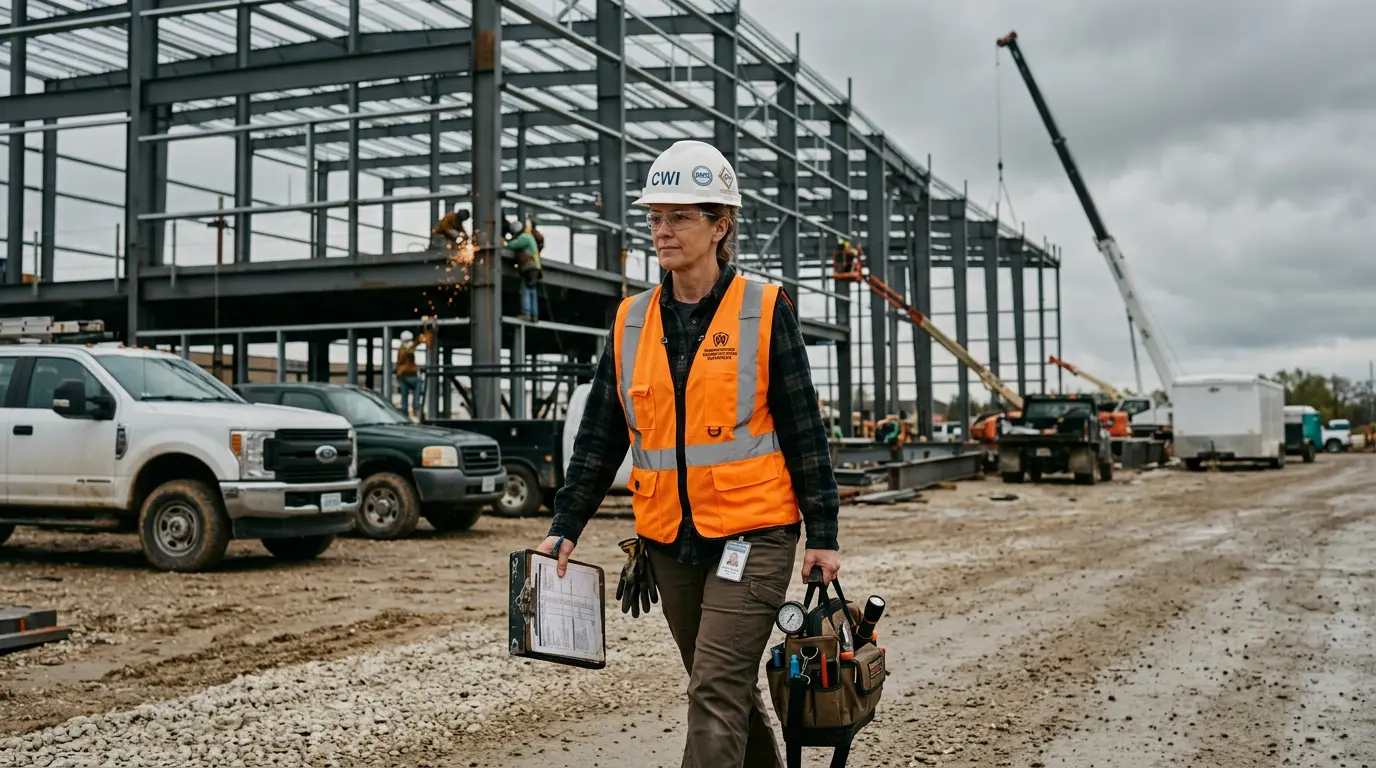
Fusion Pro is operated by an AWS Certified Welding Inspector and Certified Welding Educator and offers hands-on preparation before qualification testing.
Coaching cannot guarantee a passing result. The completed test still has to satisfy the applicable acceptance requirements.
What coaching can do is help expose weaknesses early enough for the welder to work on them.
Step 7: Don't Turn the Last Practice Session Into a Marathon
More practice is not automatically better practice.
The goal immediately before the test should be consistency.
If a welder already has the technique working, completely changing machine settings, body position, sequence, or approach at the last minute can create unnecessary uncertainty.
Use final practice sessions to reinforce the setup the welder expects to use.
If something is not working, identify the specific problem and correct it deliberately.
Step 8: Make Test Day Predictable
Certification day already creates enough pressure.
Remove unnecessary surprises.
Before the inspector arrives, make sure the company knows:
- Which welders are testing
- Which tests each person will perform
- Which process is being used
- What equipment is needed
- What material and consumables are required
- Which WPS applies
- Where testing will take place
Fusion Pro's on-site model is designed around testing welders at the employer's shop or jobsite, with the test details scoped before the visit.
Preparation makes that visit more efficient for everyone involved.
Step 9: Understand What Passing the Test Actually Proves
A successful test demonstrates a welder's ability to meet a prescribed performance standard under the qualification conditions.
It does not mean the individual is universally qualified for every welding process, material, position, or code.
AWS distinguishes the performance qualification itself from the documentation verifying that the welder met the prescribed standard.
That means employers should understand the range of qualification provided by the test and assign work accordingly.
When in doubt, review the qualification record rather than relying on the phrase “certified welder.”
Step 10: Maintain the Records After the Test
The job is not finished when the welder passes.
Qualification documentation needs to be maintained.
Fusion Pro provides signed qualification records to the employer and offers continuity tracking guidance.
Continuity can be especially important because qualifications may depend on the welder continuing to use the applicable welding process within defined time periods.
For AWS's Certified Welder program, AWS states that maintenance documentation is required every six months to verify continued use of the process. Requirements for employer-managed qualifications and individual codes can vary, so the governing requirements should always be checked.
A simple qualification tracking system can prevent an avoidable paperwork problem later.
When Does Professional Welder Test Prep Make Sense?
Not every experienced welder needs extensive coaching before every test.
Prep becomes particularly useful when:
- The position is unfamiliar
- The process has not been used recently
- The welder has failed a previous qualification attempt
- The company is qualifying newer employees
- The test supports an important upcoming project
- Multiple welders are being qualified at once
- The crew is transitioning to a different code or type of work
A short prep session focused on the actual test may be more useful than simply telling a welder to “practice more.”
Welder Certification Prep in Brookfield, Milwaukee, Waukesha, and Beyond
Fusion Pro provides welding training, certification preparation, and on-site qualification testing from its Brookfield base throughout a roughly 100-mile Wisconsin service area.
That includes companies in Milwaukee, Waukesha, Wauwatosa, Pewaukee, Menomonee Falls, New Berlin, West Allis, Oconomowoc, Racine, Kenosha, Madison, Sheboygan, and surrounding areas.
For employers, pairing focused preparation with correctly scoped qualification testing can make the certification process more organized from the first practice weld through final documentation.
Conclusion: Prepare for the Test You're Actually Taking
The best test preparation is specific.
Know the code. Know the process. Know the position. Review the WPS. Practice the actual setup. Identify weaknesses before certification day.
Most importantly, make sure your welder is preparing for the qualification the job actually requires.
Fusion Pro Test Training offers hands-on welder certification prep and on-site testing for shops and contractors throughout Brookfield, Milwaukee, Waukesha, and communities across southeast and south-central Wisconsin. Contact Fusion Pro with the code, process, material, position, and number of welders you need to prepare or qualify.
Need a CWI on your floor?
Send us the code, welding process, position, material, location, and number of welders — we'll scope the visit and get your crew qualified on site.